Suicide Prevention & Crisis Intervention-4 hours (clinicians)

Wishlist Share
Share Course
Page Link
Share On Social Media

About Course

These courses are open to LPCs, LMFTs, LCSWs/Social Workers, Psychologists, and mental health providers seeking clear, practical training in suicide risk assessment, crisis intervention strategies, ethical decision-making, safety planning, and scope-of-practice responsibilities. This course provides structured assessment tools, stabilization techniques, referral guidance, and legal/ethical frameworks to support clinicians in responding to clients experiencing suicidal ideation or acute emotional distress or for independent professional development.

Continuing education credit approval varies by licensing board. Participants are responsible for verifying eligibility requirements with their respective licensing authority prior to enrollment.

What Will You Learn?

  • Upon completion of this 4-hour course, participants will be able to:
  • Suicide Risk Understanding & Recognition
  • Identify emotional, cognitive, behavioral, and environmental warning signs of suicide risk.
  • Distinguish passive vs. active suicidal ideation, including plan, intent, and access.
  • Recognize how trauma, stress, and mental health symptoms influence suicide vulnerability.
  • Crisis Assessment Competencies
  • Conduct a structured, scope-appropriate suicide-risk assessment.
  • Use direct, clinically appropriate phrasing to assess ideation, plan, intent, and access.
  • Evaluate protective factors that may lower risk.
  • Crisis Intervention Skills
  • Apply stabilization strategies to reduce emotional overwhelm during crises.
  • Communicate effectively using non-judgmental, supportive, and de-escalating language.
  • Determine appropriate levels of care based on behavioral indicators.
  • Safety Planning & Referral
  • Develop a collaborative, scope-aligned safety plan with clients.
  • Identify when outpatient counseling is insufficient and emergency referral is required.
  • Implement ethical follow-up procedures after a crisis.
  • Ethical & Legal Responsibilities
  • Understand confidentiality limitations, duty-to-warn/duty-to-protect standards, and referral obligations.
  • Document crisis assessments and interventions in accordance with Behavioral Health Board standards.
  • This course provides practical, immediately applicable skills for real-world practice.

Course Content

Module 1 — Understanding Suicide Risk (1 Hour)

  • Overview
  • 1.1 What Does “Suicide Risk” Mean in Behavioral Health?
  • 1.2 Relationship Between Stress, Trauma, and Suicidal Ideation
  • 1.3 Common Mental Health Symptoms Associated With Elevated Suicide Risk
  • 1.4 Protective Factors and Resilience
  • 1.5 How Suicide Risk Develops: A Behavioral Model
  • QUIZ

Module 2 – Warning Signs & Behavioral Indicators(1 Hour)

Module 3 – Crisis Assessment Procedures(1 Hour)

Module 4 – Ethical & Legal Responsibilities in Crisis Work

Module 5 – Crisis Intervention Strategies

Module 6 – Safety Planning, Referral, and Follow-Up

Final quiz 10 questions

Earn a certificate

Add this certificate to your resume to demonstrate your skills & increase your chances of getting noticed.
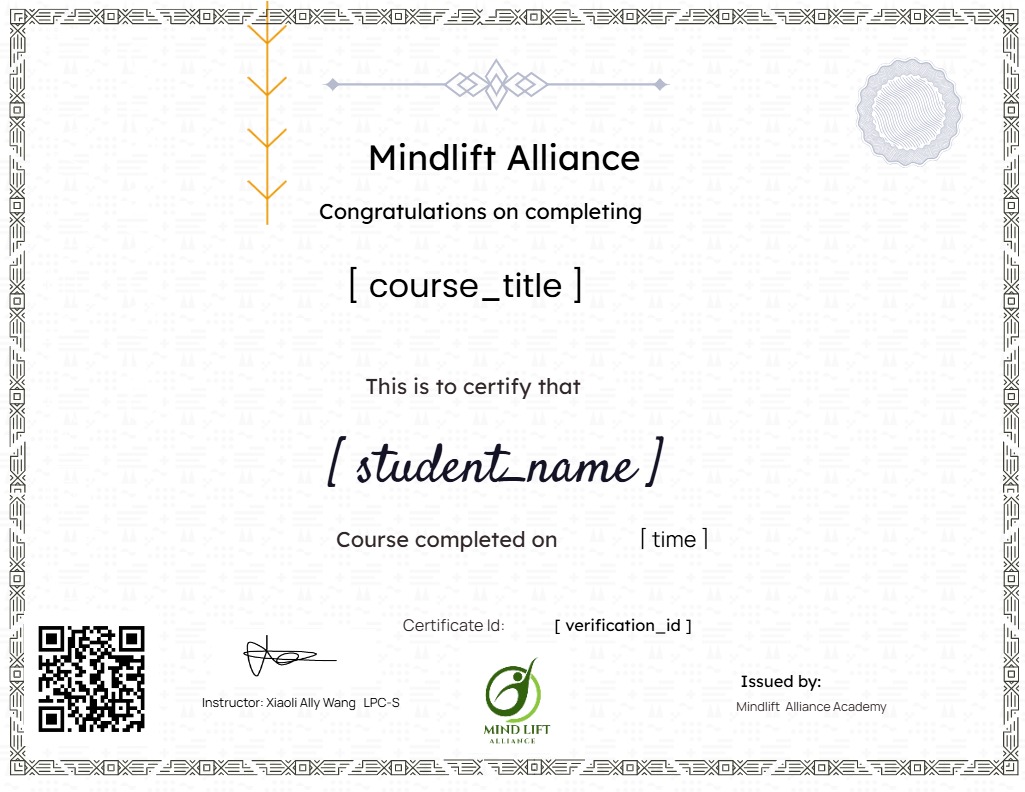
selected template

Student Ratings & Reviews

No Review Yet
No Review Yet

Want to receive push notifications for all major on-site activities?